
Blacktop driveways across Ocean County
Asphalt Paving in Toms River, NJ
Driveways built for sugar sand, bayfront fill and Jersey Shore winters, plus the sealcoating that keeps them black.
- Free estimates with a written, line-by-line quote
- Base built for sandy soil and bayfront fill, not just topped over
- Township, county and HOA rules checked before work is booked
Built for Sand, Salt Air and Shore Winters
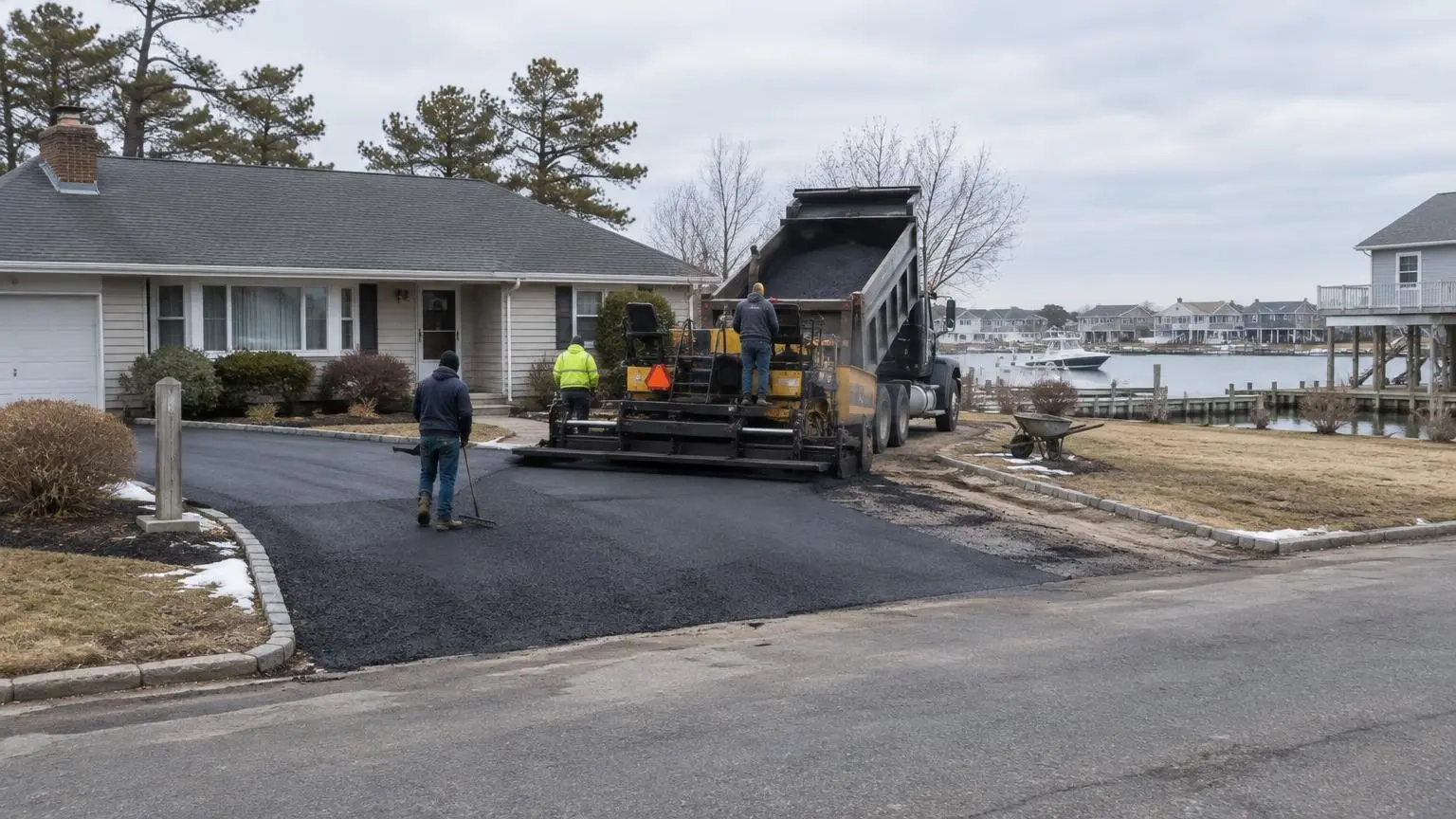
Asphalt paving in Toms River starts with sand. Most of the township's mainland neighborhoods sit on the edge of the New Jersey Pine Barrens, where the soil is the sandy, acidic material locals call sugar sand. Sand drains well, which is good for asphalt, but loose sand also moves. If the stone base under a blacktop driveway is thin or poorly compacted, the sand shifts under the edges and the tire paths, and the driveway sags and cracks. Along Barnegat Bay and the lagoons, the problem flips: low lots, high groundwater and fill that settles. We build each driveway for the ground it sits on.
The base comes first
HomeGuide's cost guide describes the usual residential section as 2 to 3 inches of compacted asphalt over 6 to 8 inches of compacted gravel, with more of both for driveways that carry trucks, boats or campers. On sand we focus on confinement and compaction, so the base cannot spread sideways. On wet bayside lots we may go deeper and build up the grade so water runs off instead of sitting under the pavement.
Winters here are real winters
Toms River's records show an average January low of about 22 degrees, almost 24 inches of snow a year and nearly 50 inches of total precipitation, with a record low of minus 24 in January 1988. Every freeze widens a crack that holds water, and plows and salt are hard on edges. Crack sealing before winter and a sealcoat every few years are what keep a driveway from breaking up early.
Sealcoating is the most-searched service in town
More Toms River homeowners search for driveway sealcoating than for any other paving service, and for good reason: sun, salt air and freeze-thaw all dry out asphalt. A sealcoat applied to clean, crack-filled asphalt in dry weather slows that down. HomeGuide puts typical driveway sealing at $1 to $2 per square foot and recommends waiting 3 to 6 months after new paving before the first coat.
After Sandy
Hurricane Sandy hit Ocean County harder than anywhere else in New Jersey: FEMA counted more than 40,000 of the state's roughly 72,000 damaged homes and businesses here, and Silverton and downtown Toms River had their worst flooding ever. Many homes near the bay have since been raised, and their driveways now run under or beside the house to a new grade. Those driveways need careful slopes, firm edges and a plan for where floodwater and rain go.
Who owns the road out front
Toms River has about 454 miles of roads. Most are township streets, but Ocean County maintains about 72 miles and NJDOT about 24, including routes like 37, 166 and 9. Work at the apron or curb follows whichever agency owns the road, and in 55-plus and HOA communities the association often has its own rules. We sort that out at the estimate.
What a typical driveway job includes
- Measuring and checking drainage, soil and the apron
- Removing old blacktop or concrete and hauling it away
- Grading and compacting a stone base
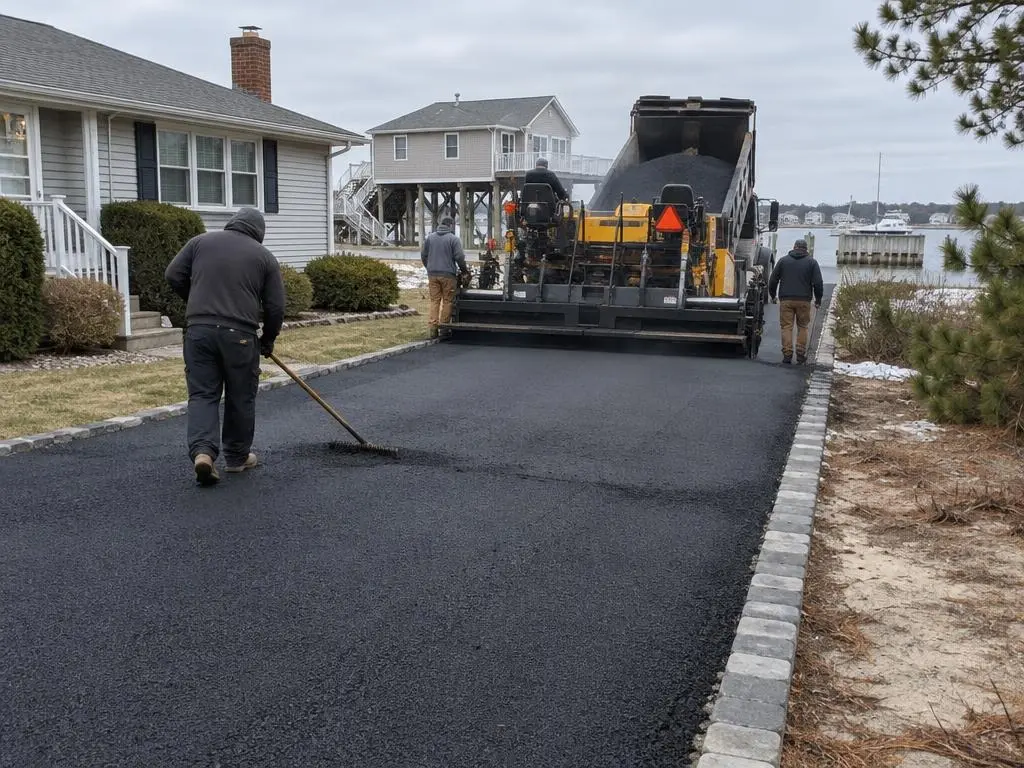
- Placing and rolling hot-mix asphalt to the thickness in your quote
- Finishing edges, including Belgian block if you want it
- Leaving care instructions and a date for the first sealcoat
Towns We Cover
We work across Toms River, from North Dover and Silverton to Gilford Park, Pleasant Plains and the barrier island beaches, and through the rest of Ocean County: Brick, Lakewood, Jackson, Manchester, Lakehurst, Berkeley and Holiday City, Beachwood, Pine Beach, South Toms River, Ocean Gate, Island Heights, Lacey and Barnegat, plus Point Pleasant, Point Pleasant Beach, Bay Head, Seaside Heights and Seaside Park on the shore, and Howell just over the Monmouth County line. Sandy inland soil, wet bayfront lots, adult communities and summer homes each need something different, and the town pages explain what.
- Asphalt Paving in Toms River, NJ
- Asphalt Paving in Brick, NJ
- Asphalt Paving in Lakewood, NJ
- Asphalt Paving in Jackson, NJ
- Asphalt Paving in Manchester, NJ
- Asphalt Paving in Berkeley, NJ
- Asphalt Paving in Holiday City-Berkeley, NJ
- Asphalt Paving in Lacey, NJ
- Asphalt Paving in Barnegat, NJ
- Asphalt Paving in Beachwood, NJ
- Asphalt Paving in South Toms River, NJ
- Asphalt Paving in Pine Beach, NJ
- Asphalt Paving in Ocean Gate, NJ
- Asphalt Paving in Island Heights, NJ
- Asphalt Paving in Seaside Heights, NJ
- Asphalt Paving in Seaside Park, NJ
- Asphalt Paving in Point Pleasant, NJ
- Asphalt Paving in Point Pleasant Beach, NJ
- Asphalt Paving in Bay Head, NJ
- Asphalt Paving in Lakehurst, NJ
- Asphalt Paving in Howell, NJ
Common Questions
How much does it cost to pave 1,000 square feet?
HomeGuide lists a 1,000 square foot asphalt driveway at about $5,000 to $12,000, or $5 to $12 or more per square foot. Angi's range is $7 to $15 per square foot. Tear-out, extra base and edging add to that. The written estimate is your price.
What is the best asphalt for a driveway?
For most driveways, a dense hot-mix surface course placed 2 to 3 inches thick over a well-compacted stone base. The base matters more than the mix. Driveways for boats, campers or trucks need a thicker section of both.
How often should I sealcoat my driveway in Toms River?
Every few years, once the surface has faded and stone starts showing. HomeGuide gives a range of 2 to 10 years by product and climate. Fill cracks first, and wait 3 to 6 months after new paving before the first coat.
Can I get my driveway paved in a 55-plus community?
Yes. Many associations set rules on timing, materials and appearance. We work within them and can provide a written scope for approval.
When is the best time to pave at the shore?
Late spring through early fall, when the ground is warm and dry. Many homeowners prefer spring or fall to avoid summer traffic on Route 37 and the barrier island routes.
My house was raised after Sandy. Can you redo the driveway?
Yes. Raised homes often need a new driveway grade, firm edges and drainage planning. We look at the new layout and the flood path at the estimate.
How long does an asphalt driveway last on sandy soil?
Cost guides put asphalt driveway life at 15 to 30 years. On sand, a compacted, confined base and regular sealing push it toward the long end.
Paving Services in Toms River
Six services for blacktop driveways and lots, from new paving to the sealcoating Toms River homeowners ask for most.
Blacktop Driveway Paving
New and replacement blacktop driveways on a base built for sandy inland lots or wet bayfront ground.
Learn more →Driveway Sealcoating
Cleaning, crack filling and sealcoat to protect blacktop from sun, salt air and freeze-thaw.
Learn more →Asphalt Resurfacing
A new blacktop layer over a solid old driveway or lot, with edges cut so heights line up.
Learn more →Asphalt Repair & Crack Sealing
Potholes, sunken patches, broken edges and open cracks fixed before winter widens them.
Learn more →Parking Lot Paving
Paving, overlays and repairs for retail, church, HOA and clubhouse lots, phased around the season.
Learn more →Parking Lot Striping
Restriping and layouts for lots, including accessible spaces, arrows, fire lanes and numbered spaces.
Learn more →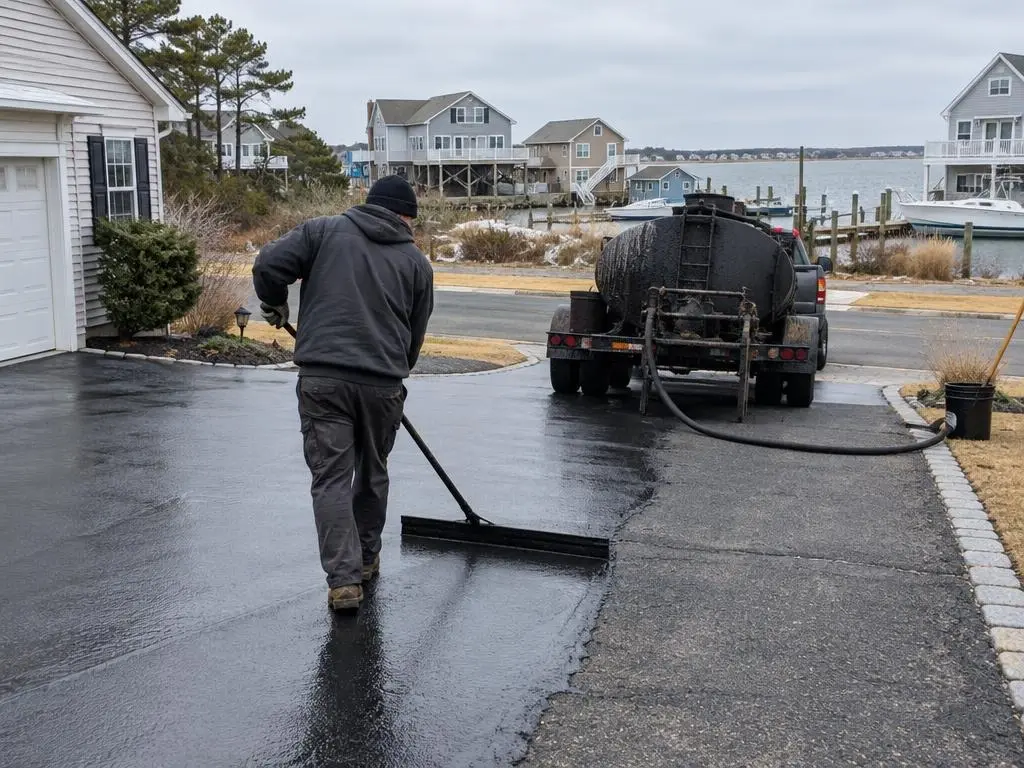
Why Homeowners Call Asphalt Paving Toms River
Base for the soil
Sand is confined and compacted; wet bayside lots get a deeper, built-up base.
Written thickness
The quote states stone base depth and compacted asphalt thickness.
HOA-friendly
We work within 55-plus and HOA rules on scheduling, color and edging.
Shore-season timing
Paving and sealing are planned around weather and summer traffic.
Get a Blacktop Estimate
Free on-site estimates in Toms River and across Ocean County.